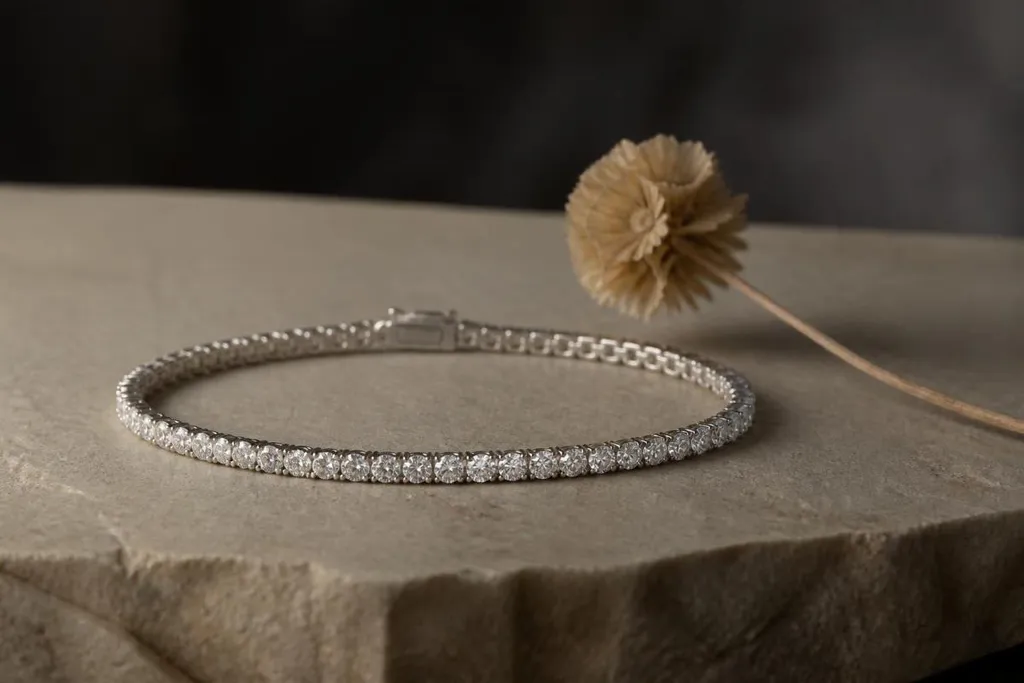
Few pieces of fine jewellery balance simplicity and presence as effectively as a tennis bracelet. Its appeal comes from repetition: a continuous line of carefully matched stones creates consistent sparkle around the wrist without requiring an elaborate silhouette. That apparent simplicity, however, places considerable importance on details such as individual stone size, setting construction, flexibility and fastening.
For anyone looking to order tennis bracelets from Lily Arkwright, the most useful approach is to consider how the bracelet will be worn rather than focusing on total stone weight alone. A finer design can become an effortless everyday piece, while larger stones give the bracelet enough presence to work as standalone jewellery. The best proportions depend on wrist size, existing jewellery and whether the bracelet is intended for frequent wear, formal occasions or both.
Choose Stone Size for the Desired Presence
Increasing the size of the individual stones changes more than the amount of sparkle. It alters the bracelet's width, visual weight and relationship with the wrist.
Smaller stones create a fine, consistent line of light. This scale works particularly well for everyday wear because the bracelet can complement a watch, rings or other wrist jewellery without becoming dominant.
Larger stones create stronger individual flashes and make the structure of the bracelet more noticeable. This can be an excellent choice for someone who wants to wear a tennis bracelet alone and expects it to provide the main jewellery statement.
Wrist proportions are worth considering. A very substantial design may feel visually heavy on a smaller wrist, while an exceptionally delicate bracelet can appear more understated than intended on a broader wrist.
The right size is therefore not necessarily the largest available. It is the scale that gives the bracelet its intended role while still feeling proportionate.
Look Closely at Setting Style and Flexibility
A tennis bracelet contains many individual stones, so setting construction influences both appearance and long-term practicality.
Fine claw settings can expose more of each stone, reducing the amount of visible metal and creating a continuous impression of brilliance. The craftsmanship must still provide sufficient security for jewellery that moves constantly with the wrist.
The links between settings are equally important. A well-designed tennis bracelet should articulate naturally rather than behaving like a rigid band. That flexibility allows the stones to follow the wrist comfortably and helps the bracelet maintain an elegant line as the hand moves.
Setting height deserves attention too. Lower-profile construction can feel particularly practical for frequent wear because there is less raised structure to catch against clothing or surrounding objects.
Metal also changes the visual result. Platinum and white gold can blend subtly with colourless stones, while yellow or rose gold introduces more visible contrast between each setting.
Prioritise a Secure and Comfortable Fit
A tennis bracelet should have enough movement to sit naturally but not so much excess length that it repeatedly slides over the hand or catches on objects.
A closer fit keeps the stones in a relatively consistent position. A slightly looser fit creates more fluid movement, which some wearers prefer. Excessive looseness, however, can increase both inconvenience and the chance of impact.
The clasp is particularly important because a tennis bracelet can represent a significant piece of fine jewellery. It should close positively and feel secure during ordinary movement. Additional safety mechanisms can provide further reassurance depending on the design.
Try to assess fastening from a practical perspective as well. A clasp may be extremely secure but frustrating if it is difficult to operate during normal use.
For everyday wear, security and ease should work together rather than being treated as separate concerns.
Consider Stacking, Care and Daily Wear
Tennis bracelets are versatile enough to be worn alone or layered.
Beside a watch, a finer bracelet can provide sparkle without competing with the watch case. More substantial tennis designs often benefit from being given additional visual space.
Stacking multiple bracelets can create a richer look, but constant contact between metal surfaces and gemstone settings may lead to marks over time. Varying widths and allowing some separation can make the combination feel more intentional while reducing unnecessary rubbing.Regular care is particularly important because numerous stones mean numerous settings. Hand creams, soaps and everyday residue can collect around them and reduce apparent brightness.
Gentle cleaning helps maintain sparkle, while periodic professional inspections can identify worn or loosened settings before they become more serious.
Final Thought
A tennis bracelet succeeds through consistency: evenly matched stones, secure settings, comfortable articulation and proportions that suit the wrist.
Rather than choosing according to total stone weight alone, consider how individual stone size affects width and everyday wear. Combine that with a secure clasp, an appropriate fit and a setting designed for regular movement. With those elements resolved, a tennis bracelet can move effortlessly between everyday jewellery and more formal occasions while retaining the clean elegance that makes the design so enduring.